
What is Cataract?
The crystalline lens of the eye is transparent and colourless in young individuals. Its primary function is to focus parallel rays of light from infinity on the retina. The imprint formed by these light rays is sent to the brain through the optic nerve, and an image is formed. This is how we are able to perceive objects. The lens tends to become opaque as age progresses. This clouding of the normally clear lens is called “Cataract”. The word cataract literally means “waterfall” in Greek. This is related to the fact that patients with cataract perceive objects hazily as through a waterfall. The rays of light are obstructed by the opacity within the lens, as a result of which, objects appear blurred.
How Common is Cataract?
Cataract is an important cause of preventable cause of blindness. Cataract has been reported to be responsible for 50-80% of the bilaterally blind in the country. Three out of every four individuals [aged older than 60 years] in this country develops a cataract.
What Causes Cataract?
The most common cause of cataract is related to ageing changes in the eye. The lens tends to lose its clarity with age. Other causes of cataract include:
- Family history of cataracts
- Medical problems such as diabetes
- Injury to the eye
- Medications, especially steroids
- Radiation exposure
- Smoking
- Surgery for another eye problem
- Too much exposure to ultraviolet light (sunlight)
- In many cases, cause is unknown

What are the symptoms of cataract ?
Gradual and painless vision loss. Progressive blurring of objects is classical of developing cataracts. Frequent change of glasses can also be a sign of progressing cataract. Often, people who needed reading glasses are able to read without any glasses. Being sensitive to glare at night
- Cloudy, fuzzy, foggy, or filmy vision
- Difficulty seeing at night or in dim light
- Double vision
- Loss of color intensity
- Problems seeing shapes against a background or the difference between shades of colors
- Seeing halos around lights
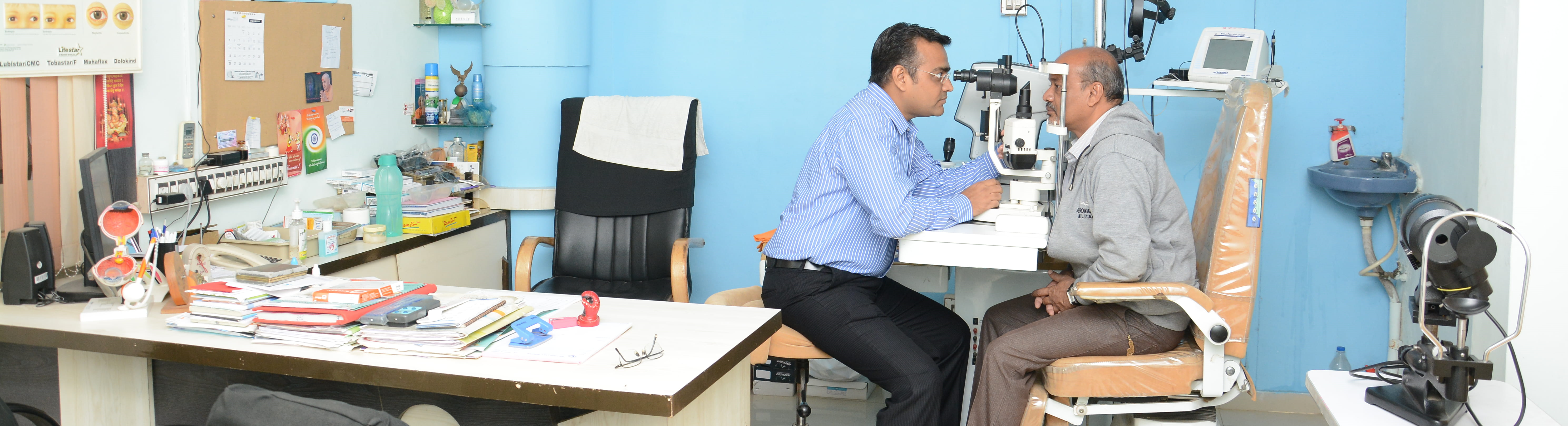
By performing a detailed slit-lamp examination of the eye, your doctor can detect the cataract.
How is Cataract Treated?
Cataract Surgery is the only way a cataract can be removed.
Your doctor can examine you and tell you when you need surgery for cataract.
Replacing it with an artificial intraocular lens at the time of cataract surgery helps in restoring vision to normal. No medications, exercises or dietary supplements have been shown to prevent or reduce cataracts.
Catarct surgery should be planned when cataract cause enough loss of vision to interfere with daily activities. It is not advisable to postpone surgery too long, as it can cause hardening of cataract. Sometimes, the cataract may become hypermature and can lead to complications in the eye. By performing a detailed slit-lamp examination of the eye, your doctor can detect the cataract
About Cataract Surgery
Cataract surgery through phacoemulsification is the most modern and advanced method for performing cataract surgery.
Is Cataract Surgery Safe?
Modern Cataract surgery is now very safe, and can be done on an outpatient basis.
There is no need for admission into the hospital. It is a daycare surgery and involves staying in the hospital for 2 to 3 hours.